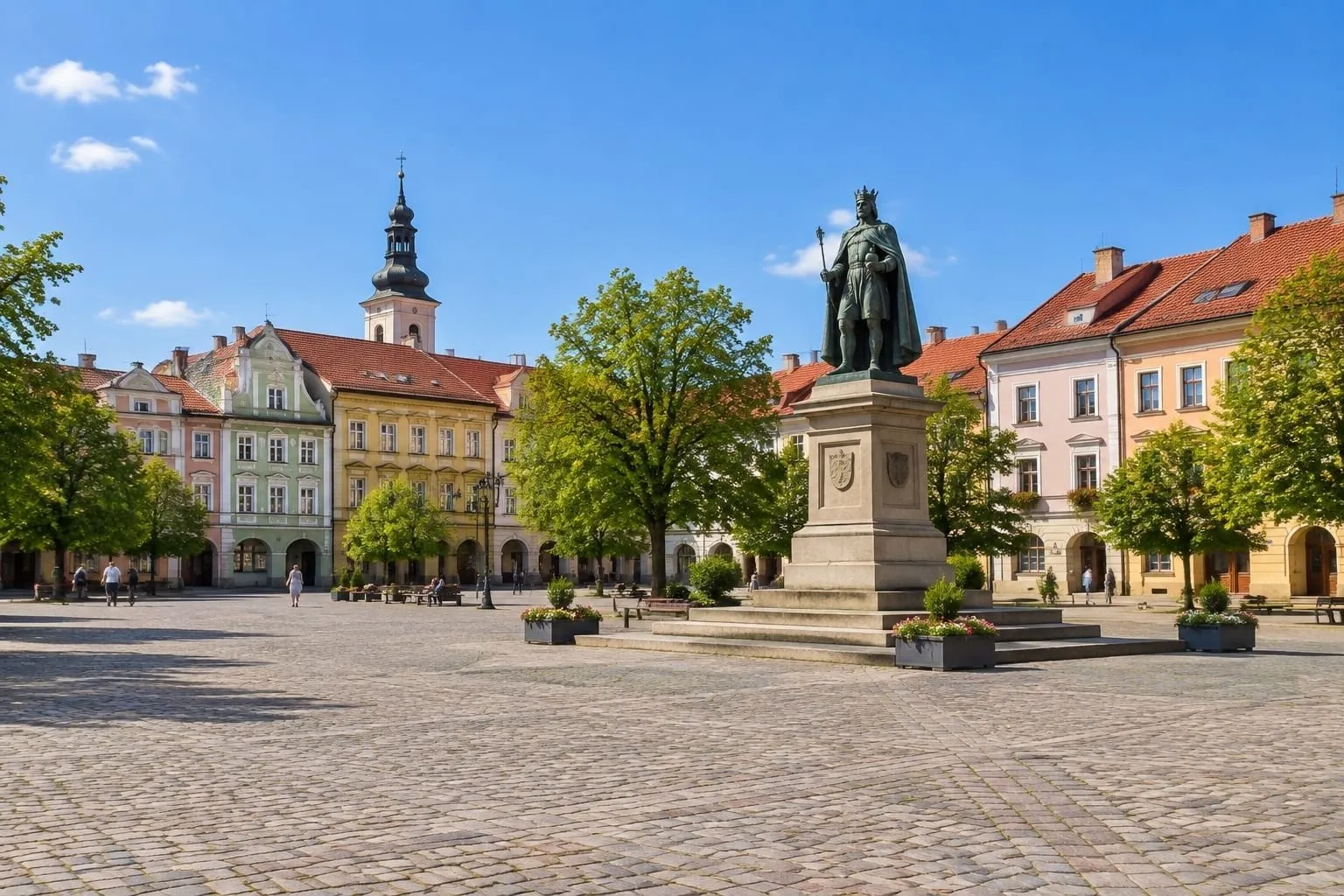
Bochnia or Wieliczka - which salt mine to visit
Bochnia or Wieliczka? We compare both salt mines - routes, visit length, attractions for children and access - and help you pick the right one for your trip.
Two salt mines, less than forty kilometres apart, both on the UNESCO list and both with underground chapels carved out of salt. When planning a trip to the Kraków area, many people ask themselves the same question - Bochnia or Wieliczka? The choice seems simple, because Wieliczka is far better known, but in practice the two mines offer a completely different experience.
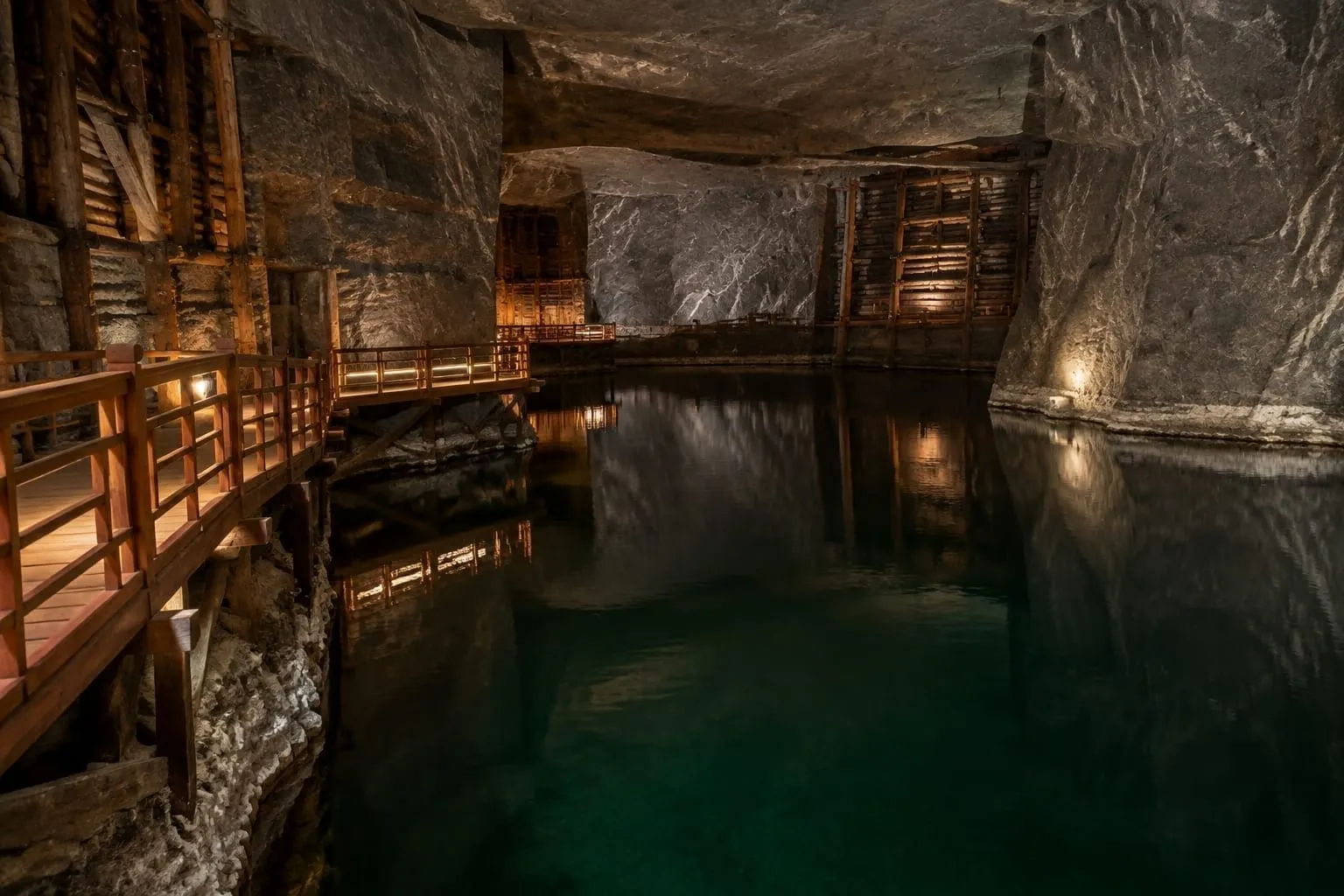
Wieliczka is a classic guided tour in which the starring roles go to monumental chambers, salt sculptures and the Chapel of St. Kinga. Bochnia leans towards adventure - a ride on an underground train, a boat crossing over a working flooded with brine and a long wooden slide. The volume of visitors, the length of the visit and the way the day is organised are different too.
In this article we compare the two mines point by point. We rely on information published by both museums on their official websites, and where details change from season to season, we refer you to the source. We compare the routes, timing, physical demands, attractions for children, access and the logistics of the whole day.
Our view is that there is no single better mine. There is a mine that suits a particular trip better. For a first visit to the region and for visitors focused on history and architecture, we would choose Wieliczka. For families with school-age children looking for activity and excitement, Bochnia is a strong candidate. And when time allows, the two can be combined over one long weekend.
Two salt mines with a shared history
For centuries rock salt was one of the most valuable resources of the Kingdom of Poland. The deposits stretching beneath Wieliczka and Bochnia were worked from the Middle Ages, and for centuries both mines operated as royal enterprises. In 1368 King Casimir the Great issued the saltworks statute, which regulated the organisation of mining and the salt trade in both centres. The Bochnia Salt Mine recalls this date today on its history page.
Bochnia is considered the oldest rock salt mine in Poland. Its origins are dated to 1248, when a rock salt deposit was discovered here. The mine in Wieliczka developed in parallel and in time became the largest centre of the Kraków Saltworks. After mining ended, both sites were converted into tourist attractions, and Bochnia began welcoming visitors in the 1990s.
Two terms are worth knowing here. A saltworks (in Polish “żupa”) was a historic royal salt enterprise that managed the mines and the salt trade. A chamber is an underground space left behind after the salt was extracted, often very large, which today serves as an exhibition hall, a chapel or a place to relax.
The Wieliczka Salt Mine was added to the UNESCO World Heritage List in 1978, in the very first group of listed sites. In 2013 the listing was extended to include the Bochnia Salt Mine and the Saltworks Castle (Zamek Żupny) in Wieliczka. Formally, then, they are parts of a single UNESCO site called the Royal Salt Mines in Wieliczka and Bochnia.
Despite the shared listing, the two mines attract very different numbers of visitors. Wieliczka is one of the most visited attractions in Poland and in high season welcomes crowds of tourists from home and abroad. Bochnia remains less well known, which many people see as an advantage. Most guides describe only one of them and rarely set them side by side. We want to fill that gap with a concrete comparison based on data from the museums themselves rather than general impressions.
It is also worth remembering that the mines differ in the nature of the deposit and the layout of the workings. Wieliczka has a route spread across several levels, covered mainly on foot. Bochnia is narrow and elongated, which is why underground transport has long been used here. That difference translates directly into what a visit looks like today.
Visitor routes in Bochnia and Wieliczka
The core offer in Wieliczka is the Tourist Route (Trasa Turystyczna). According to the mine’s official website it is about 3.5 km long, reaches a depth of 135 m and includes more than 800 steps. A visit takes on average 2 to 3 hours, including the exhibition of the Kraków Saltworks Museum. Along the way visitors pass salt chapels, brine lakes and vast chambers with sculptures, and the highlight is the Chapel of St. Kinga (Kaplica św. Kingi). We cover its history, decoration and the legends of the patron saint of miners in a separate article in this series.
In Bochnia the visit starts at the Campi Shaft (ul. Campi 15). You go down and come back up in a miners’ lift, and part of the route is covered by an underground train that runs to the Ważyn Chamber. The most popular choice is the tourist route with a multimedia exhibition. The mine states that there are about 700 steps on the route and that the whole visit takes 3 to 4 hours, depending on the option.
Route options in Bochnia
- the route with the multimedia exhibition, with no age restrictions,
- an extended version with an underground boat crossing, for ages 3 and over,
- a version with the boat and the Horse Road, the most extensive option, for ages 7 and over,
- the “Salt Witness” (Solny Świadek) route, leading through previously inaccessible workings,
- a step-free route for visitors with disabilities.
Wieliczka has the edge in scale and in the grandeur of its interiors. Bochnia offers more options that can be matched to the age and fitness of the group.
In practice the difference is noticeable from the very start. In Wieliczka the visit begins with a descent down wooden stairs, and the whole route is a walk through one chamber after another, at a pace set by the guide. In Bochnia, after the lift ride down, part of the way is covered by train, and the multimedia exhibition tells the story of the mine through projections and stage sets. Those who enjoy a traditional museum visit will feel more at home in Wieliczka. Those who prefer variety and a touch of adventure will more often be happier in Bochnia.
Attractions for children and families
On this point Bochnia has a clear advantage. The route ends in the Ważyn Chamber, the largest chamber in the mine. According to the mine it is 255 m long, more than 14 m wide and lies at a depth of 248 m. Inside there is a sports pitch, a playground with a salt sandpit, table tennis and table football, as well as a food area and toilets.
A major attraction is the 140 m underground wooden slide, open to children aged 9 and over as part of a stay in the Ważyn Chamber. On top of that there is the train ride and the boat crossing, which the mine describes as the only one of its kind in Europe. For children who quickly lose interest during a guide’s longer stories, a programme like this is often easier to manage.
Bochnia also offers the family tour “Kingdom of the Treasurer” (Królestwo Skarbnika), presented as a story, as well as overnight stays underground. For families who want to spend more time in the mine, a stay in the Ważyn Chamber alone lasts about 3 hours and gives children a freedom of movement that is missing on a classic guided route.
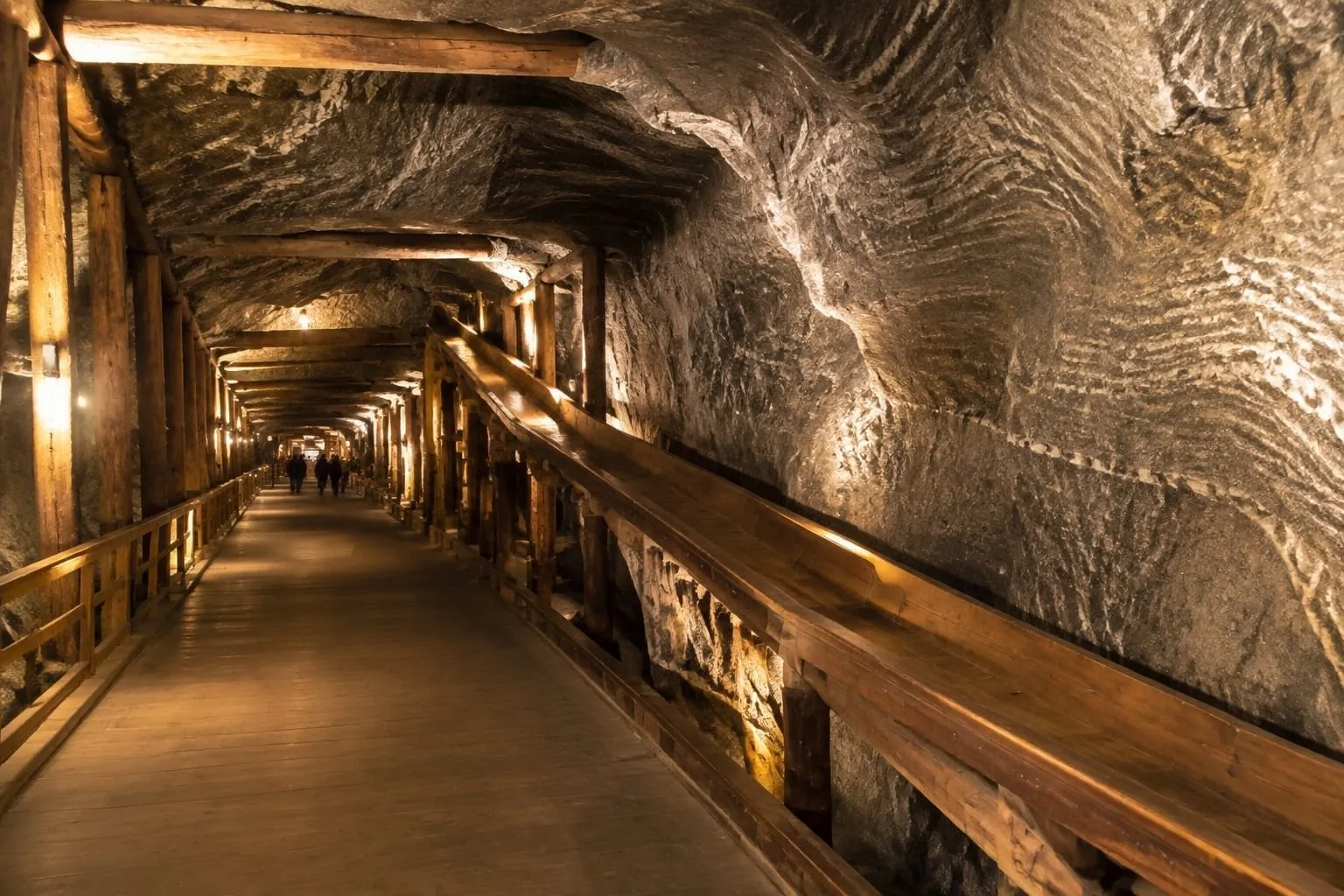
Wieliczka also welcomes families with children, but its main route is museum-like in character. More than 800 steps and two or three hours of walking in a guided group is quite a challenge for a pre-schooler. Older children usually respond well to the salt sculptures, the legends of St. Kinga and the underground lakes. Families planning a visit to Wieliczka should allow for a realistic pace, bring a snack for afterwards and book an earlier entry time.
Time, fitness and conditions underground
Both mines call for some preparation. In Wieliczka the temperature on the route is 17-18°C, according to the mine. Bochnia is slightly cooler, with the mine quoting around 14-17°C all year round, summer included. In both cases a sweatshirt or light jacket and comfortable shoes with good soles will come in handy. We have put together a detailed list in our guide on what to bring to the salt mine.
The physical effort differs too. Wieliczka is a shorter but more intensive walk with a large number of steps, at the steady pace of the group. Bochnia spreads the effort over a longer time, and in the Ważyn Chamber you can rest on loungers set in salt alcoves. Among the contraindications for going underground, the Bochnia mine lists heart or respiratory failure and claustrophobia, among others. Visitors with health problems should read the regulations of the chosen mine before buying a ticket.
Comparison of the key details
| Criterion | Wieliczka - Tourist Route | Bochnia - route with multimedia exhibition |
|---|---|---|
| Depth | up to 135 m | over 200 m, Ważyn Chamber 248 m |
| Route length | approx. 3.5 km | approx. 3 km on foot |
| Steps | over 800 | approx. 700 |
| Visit length | 2-3 hours | 3-4 hours |
| Temperature | 17-18°C | 14-17°C |
| Going down and up | down by stairs, back up by lift | lift both ways |
| Active attractions | none | train, boat, slide |
| UNESCO listing | 1978 | 2013 |
Bochnia takes longer but is easier on the legs thanks to the lift and the train. Wieliczka is shorter but involves more steps. For people with knee problems, this can matter more than the length of the route itself.
Crowds, tickets and booking
Wieliczka receives a great many visitors in high season, so it is worth buying a ticket for a specific time online in advance. The mine’s official website divides Tourist Route tickets into standard, reduced and family tickets. Prices vary with the season and the language of the tour, so we check them before travelling at wieliczka-saltmine.com.
Bochnia is quieter, but for weekends and the summer holidays it is also worth buying tickets online. The mine says online tickets are cheaper than at the ticket office and can be bought no later than 60 minutes before entry. Current prices are available at kopalnia-bochnia.pl.
Both museums offer discounts for families and groups. Holders of the Kraków Card (Karta Krakowska) can get a discount on selected routes in Bochnia, the size of which has changed over the years.
When planning a budget, you need to take more than tickets into account. The longer visit in Bochnia usually means a meal underground or straight after coming out. In Wieliczka the shorter route leaves time for lunch in town and a walk around the area. For a family with two children, the difference in the total cost of the day is therefore often smaller than ticket prices alone suggest.
Getting there and planning the day
Wieliczka lies just outside Kraków, by a junction of the A4 motorway. Bochnia is further east. According to the conadrogach.pl route planner, the drive from Wieliczka to Bochnia takes about 30-35 minutes, depending on the route. That distance makes it possible to combine both mines on one trip, although visiting both on the same day means 5-7 hours underground, which is too much for most people.
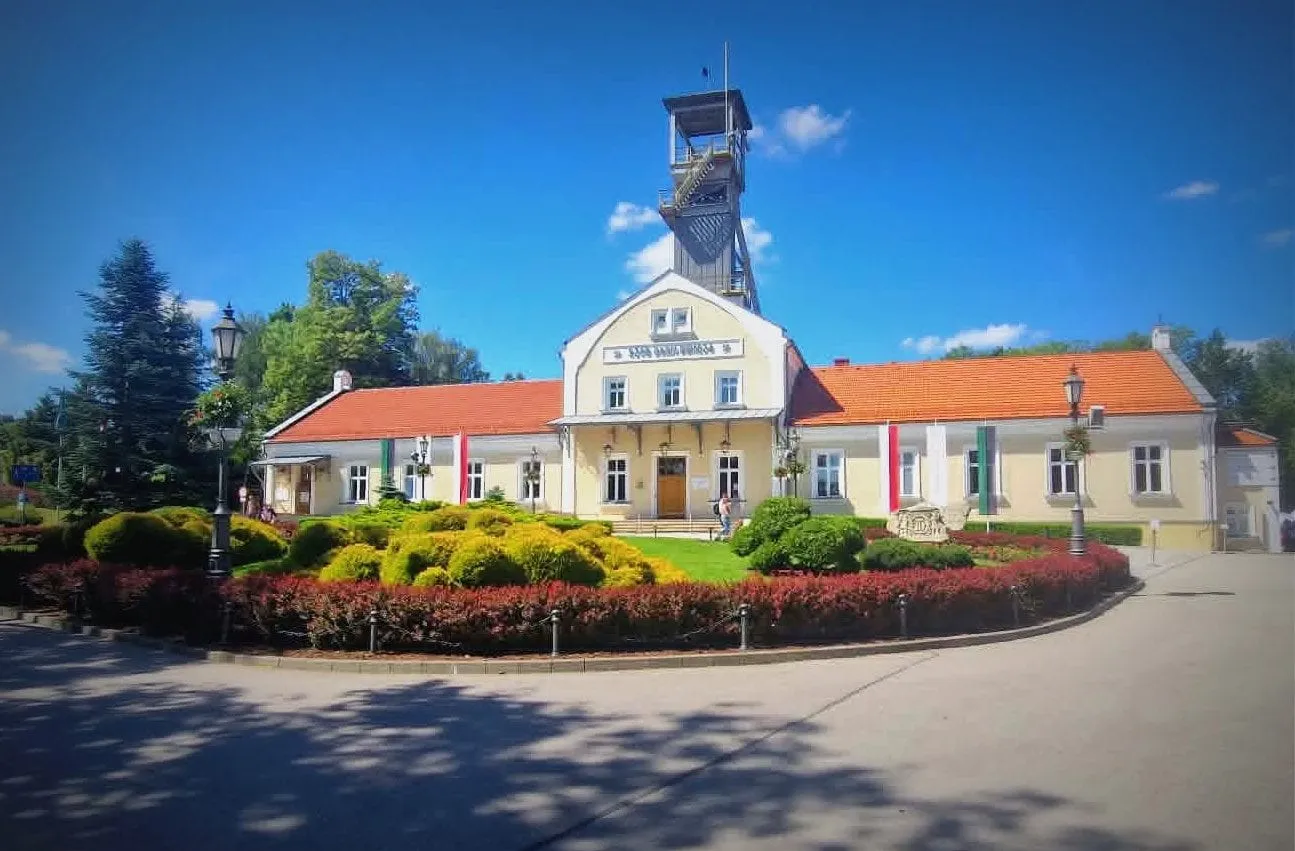
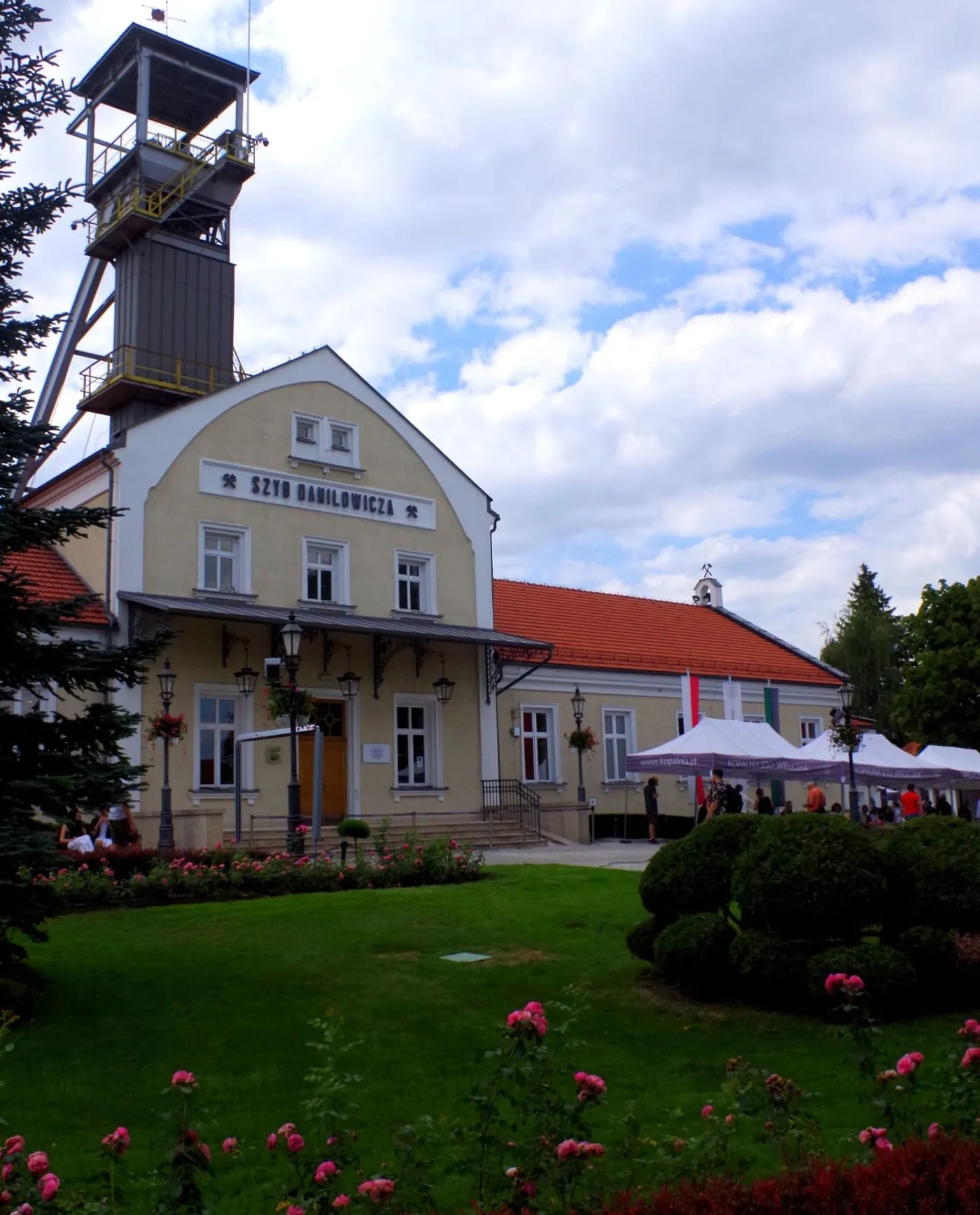
In Wieliczka everything is close by. From the salt mine car park with online booking it is about 30 m to the Daniłowicz Shaft (Szyb Daniłowicza), around 4 minutes on foot to the Saltworks Castle, around 5 minutes to the graduation tower (tężnia solankowa) and around 7 minutes to the Main Square (Rynek Górny). This makes it easy to add a walk around the town after your visit without moving the car.
In Bochnia the visit starts at the Campi Shaft, and the mine mentions on its website a car park for cars next to it. Allow time to walk to the ticket office and collect your tickets before your entry time.
Which salt mine to choose for your trip
How do you turn this comparison into an actual decision? We suggest a few scenarios.
First visit to the region, little time. We choose Wieliczka. The route takes 2-3 hours, the mine is close to Kraków, and the Saltworks Castle, the graduation tower and the market square are nearby. A plan like this is easy to fit into one day.
Family with children aged 7-12. The stronger choice is Bochnia with the boat crossing option. The train, the boat and the Ważyn Chamber with its sports pitch and playground give children breaks from listening to the guide.
Older visitors or those with limited fitness. Bochnia is worth considering, because you go down and come back up by lift and part of the route is covered by train. The mine also has a step-free route for visitors with disabilities, which requires contacting the visitor service office in advance.
Long weekend in Lesser Poland (Małopolska). We combine both mines, but on separate days. On the first day Wieliczka with an afternoon walk around town, on the second Bochnia with a stay in the Ważyn Chamber. We have gathered other ideas for trips within an hour’s drive in our article on day trips from Wieliczka.
Travelling with a dog or a small child in a carrier. Before buying a ticket we check the regulations of the chosen mine, as entry rules for such visitors and animals vary.
A few principles are useful in every scenario. We buy tickets online for a specific time. We leave spare time for the journey and parking, because arriving late often means waiting for the next group. In Wieliczka a good solution is to book a parking space in Wieliczka for the same day as your mine ticket. The ticket with a QR code arrives by email, and entry is possible between 7:00 and 18:00.
For a visit to Bochnia, on the other hand, it is worth arriving early, because the longer route and the stay in the Ważyn Chamber take up most of the day.
After the visit it is worth planning a meal. By the Daniłowicz Shaft you will find Warzelnia Smaków and Karczma Halit, and the VIP option at the car park includes a table at the partner restaurant and a 15% discount on food.
Where both salt mines are heading
For years both mines have been developing their offer in a similar direction. Themed routes, multimedia and programmes for specific groups of visitors are playing an increasingly important role instead of a single all-purpose tour.
In recent years Bochnia has launched the multisensory “Salt Witness” route, prepared with the help of EU funds, as well as a version for visitors with disabilities and their carers. It is also expanding recreational and overnight stays in the Ważyn Chamber. The mine’s microclimate is presented there as conducive to rest, especially for people with allergies. We can expect this mine to keep focusing on active leisure and families.
Wieliczka is developing several products in parallel, from the Tourist Route and the Miners’ Route (Trasa Górnicza) to its health resort offer. With visitor numbers rising, online booking and spreading visitors across different times of day are becoming increasingly important. For visitors this means greater predictability, but also the need to plan ahead, especially on long weekends and during the school holidays.
For visitors the conclusion is simple. Choosing between Bochnia and Wieliczka will less and less often be a choice of the “better” mine, and more and more often a matter of matching a particular route to the group. That is why before every trip we recommend checking the current list of routes on both museums’ websites, as the offer changes from season to season. New routes often launch before “majówka” (the early May holiday period in Poland) or the summer holidays, and some of them run only on selected days.
Bochnia or Wieliczka at a glance
The question “Bochnia or Wieliczka” has no single answer, because the two mines meet different needs. Wieliczka is a grand, monumental route about 3.5 km long, with the Chapel of St. Kinga, salt sculptures and lakes, visited in 2-3 hours. It lies right next to Kraków and combines well with a walk around the town, the Saltworks Castle and the graduation tower.
Bochnia is the oldest salt mine in Poland, with a history going back to 1248. It offers a lift ride down, an underground train, a boat crossing and the Ważyn Chamber with a sports pitch, playground and 140-metre slide. The visit takes longer, but it is less tiring on the legs and more engaging for children.
Coming back to the view set out at the start, we choose the mine to suit the trip. A first visit to the region, limited time and an interest in history point to Wieliczka. A family with children, the need to move around and a wish to avoid the biggest crowds point to Bochnia. For a longer stay, the best solution is to combine both mines on separate days.
Whichever you choose, it is worth buying tickets online and allowing extra time for the journey. For a visit to Wieliczka, a convenient option is the car park 30 m from the Daniłowicz Shaft with a space guaranteed for your chosen day. You can choose to park for 2 hours or for the whole day.
Questions about the Bochnia and Wieliczka salt mines
Are Bochnia and Wieliczka the same salt mine?
No. They are two separate mines, about 30-35 minutes apart by car. Since 2013, however, they have shared a single UNESCO listing as the Royal Salt Mines in Wieliczka and Bochnia, together with the Saltworks Castle.
Which salt mine is older?
Bochnia is regarded as the oldest rock salt mine in Poland, with its origins dated to 1248. Wieliczka developed over the same period and became the largest centre of the Kraków Saltworks. The history of both mines is presented in the exhibition of the Kraków Saltworks Museum, part of which is included in the Tourist Route in Wieliczka.
Can you visit both salt mines in one day?
Technically yes, but we do not recommend it. Together that means 5-7 hours underground and more than 1,500 steps. It is better to spread the visits over two days and spend the first evening resting or strolling around the Main Square (Rynek Górny) in Wieliczka. On the second day the drive to Bochnia takes about half an hour.
Which salt mine is better for young children?
For school-age children Bochnia usually works better, thanks to the underground train, the boat ride and the Ważyn Chamber with its playground. The slide is open to children aged 9 and over, and the boat option to children aged 3 and over.
How much time should you allow for a visit to Bochnia?
The mine states that a visit takes 3 to 4 hours, depending on the option. Adding the journey, buying tickets and a meal, it is worth setting aside most of the day for Bochnia. A recreational stay in the Ważyn Chamber lasts about 3 hours.
Can you enter the Wieliczka Salt Mine without booking?
Tickets are also sold at the ticket offices, but in high season there are often few places left for particular times. It is safer to buy a ticket online in advance and plan your journey around it. Booking a parking space by the Daniłowicz Shaft works the same way, as it is tied to a specific day.
Do you have to walk down stairs in Bochnia?
You go down and come back up in a miners’ lift, and part of the route is covered by underground train. Even so, there are about 700 steps on the route itself. The exception is the “Salt Witness” (Solny Świadek) route, which you walk down by stairs.